Posted on

Melting Ice and Eroding Desert: Art Reflecting Environmental Change

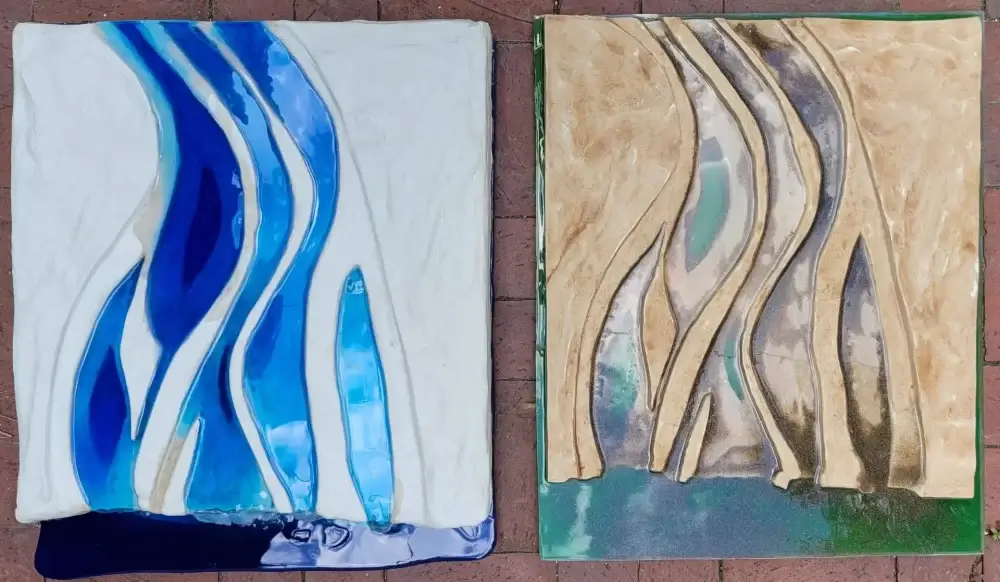
Top down less reflective view of resin art sculptures

My watercolor art took a sharp turn into plaster this summer. The warm dry weather allowed me to work outside. This made the plaster and resin easier to clean. I created a design which was inspired by the braided curving river flows in Iceland. The runoff from higher elevations would lose energy in the flat coastal lands. It would then bend and weave through black volcanic earth. This created intricate patterns looking like veins. See Andy Mumford website for incredible landscape photography of Iceland. I re-used the design for the desert, which was cast in plaster as well from the original mold. The waterfall is made of resin and the plaster cast of the landform is supported by Styrofoam skinned with plaster. The resin base helps to protect the plaster, which has a tendency to crack until it is supported. These two pieces will stand the test of time.

The earth, however, may not stand the test of time. With our industrialization of the world, humans have caused global warming from greenhouse gases and carbon emissions. Many countries and people are working to reduce their carbon footprint, but many are not; see https://ourworldindata.org/co2-and-greenhouse-gas-emissions. We are all in this together. We need to take climate change seriously. This is necessary to save the glaciers, rainforests, and Earth One. We do it for the sake of our children. Here are ten simple choices you can make: https://oceanservice.noaa.gov/ocean/earthday.html

earthday infographic
plaster sculpture of melting glacier sheet looking down at flowing water.
“Artic” topographic art depicting ice sheets melting
"Desert" topographic art showing desert soil eroding from floods, a sculpture made with plaster and resin. Watercolor was used to create shadows.
“Desert” topographic art showing desert soil eroding from floods, a sculpture made with plaster and resin. Watercolor was used to create shadows.
Posted on

Painting Vacation Landscapes

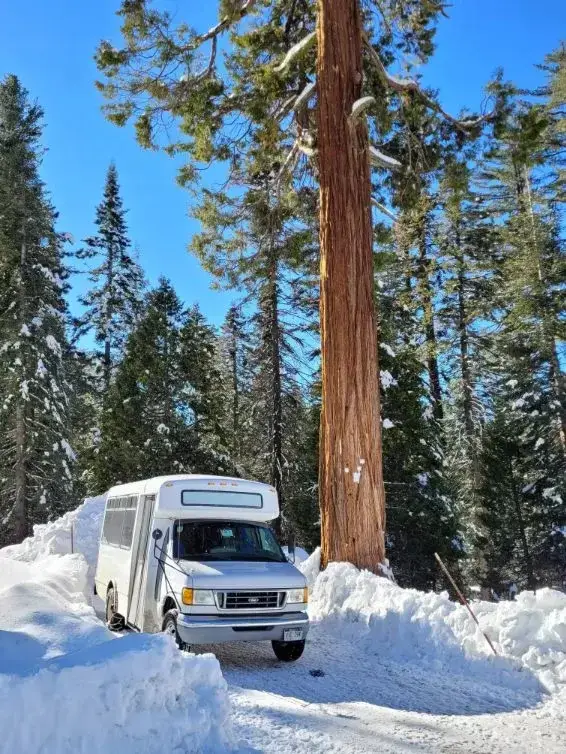
shuttle bus (camper) parked in the snow under a Sequoia tree in the Sierra Mountains

The weather won’t last so I’m finishing up my plaster and resin phase. I’ll switch back to lovely watercolor paintings of your favorite vacation spots or travel scenery. I spend my day thinking about art! Yes, I work part time at Blick Art Materials in Omaha, NE. My employee discount helps to buy supplies. I like to experiment and try new products. I have learned so much with that experience and by talking to customers. Ask for John if you happen to stop into the Omaha store. In the mean time, send me a vacation photo. I want to practice the product I’m offering. These are 11″ x 14″ landscape paintings in watercolor. Your favorite vacation spot is inspiration to get you through another year of work! Hang it on your office wall or at home. Daydream.

image 1
Photo of El Capitan from Yosemite Campground
image 8
Anacapa Island off Southern California Coast – Plein Air
image 7
Photo of Anacapa Island off California Coast
image 3
“Light vs Dark” El Capitan Beach California at Late Sunset
image 2
Photo of El Capitan Beach California at Late Sunset
image 9
Salt Point California = Plein Air
image 6
Photo of Salt Point California
image 4
Exposed Rocks at Point Arena California
image 5
Photo of Exposed Rocks at Point Arena California
Posted on

Three Dimensional Watercolor

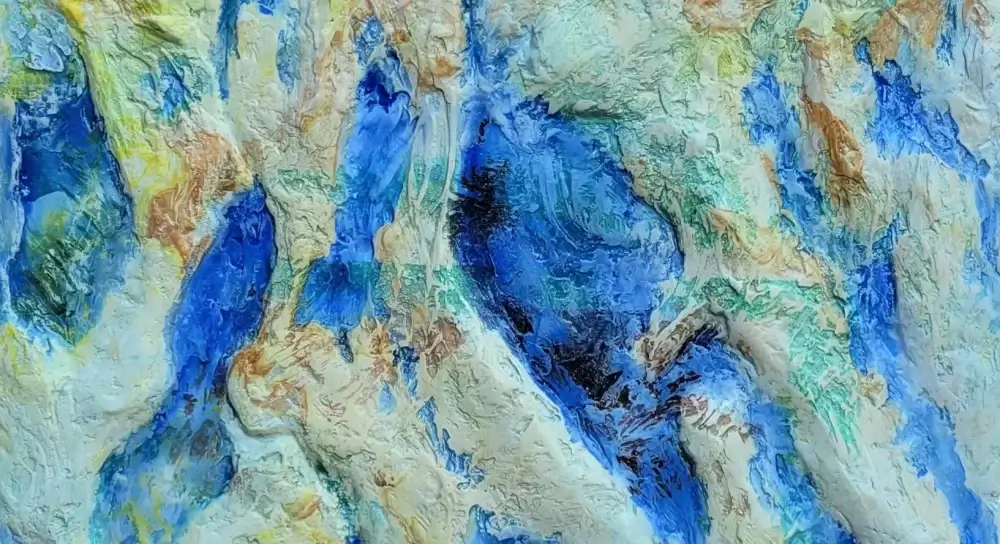
three dimensional watercolor painting of tide pools using yellow, white, sienna, viridian, and ultramarine blue

I’ve been spending a lot of time looking at shadows cast from sunlight onto landscapes. My three-dimensional watercolors allow me to place a light where the sun would be. I can then examine the landscape and the sun’s shadow from mountains in the watercolor. How do I do that? Plaster models of mountains, hills, beaches and tide pools. I’ve learned to create a model from hardened foam and then cover that with pottery plaster.

The pottery plaster is stronger than Plaster of Paris. In fact, I add a hardener to the mix of powdered pottery plaster that makes it “clinker”. I can form, carve, sculpt, texture and smooth the land. I’ve done flat oceans and coastlines with waves. I’ve crafted hills in Jalama Beach in California and mountains in Tucson, Arizona. I also created abstracts to study shadows. A light source can be added to the three-dimensional watercolor painting. This addition gives the effect of a western setting sun, for example.

The lights come with some of the paintings in shadow boxes. The lights are battery operated LED lights with a motion sensor. How cool is that?

The plaster takes the watercolor easily and it sticks nearly permanently. I’ve experimented with water on the plaster and just how much it can stand without degrading. I’ve used a laser level to find “horizontal” on the plaster cast. I’m at the point where I’m happy with the results. Many of the art pieces are for sale on this website https://watercolorwildflowers.com/store/

three dimensional watercolor painting of tide pools using yellow, white, sienna, viridian, and ultramarine blue
Tide Pools 1, 34″ x 34″ x 3″ watercolor on plaster
Dorland's cold wax jar used to seal watercolor on plaster relief model
Topographic relief model of Jalama Beach, California. Rocky cliffs give way to rolling green and red hillsides where ice plant grows in abundance.
large plaster on board abstract relief of desert mountains in a black floating frame. Colors of yellow and red and turquoise change from the warm southern light to cool blue shadows away from the light.
36″ x 36″ plaster on board abstract relief of desert mountains. Colors of yellow and red morph from the warm southern light. Turquoise transitions to cool blue shadows away from the light.